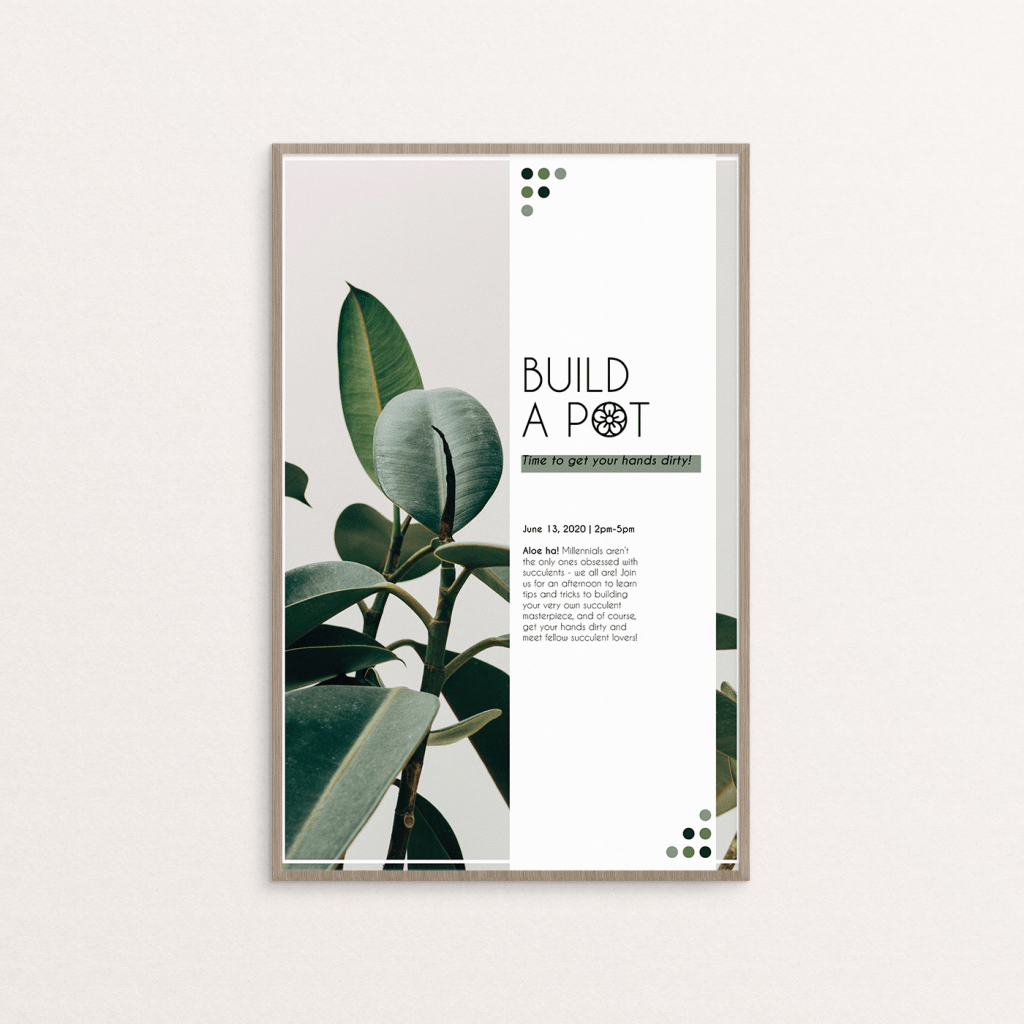
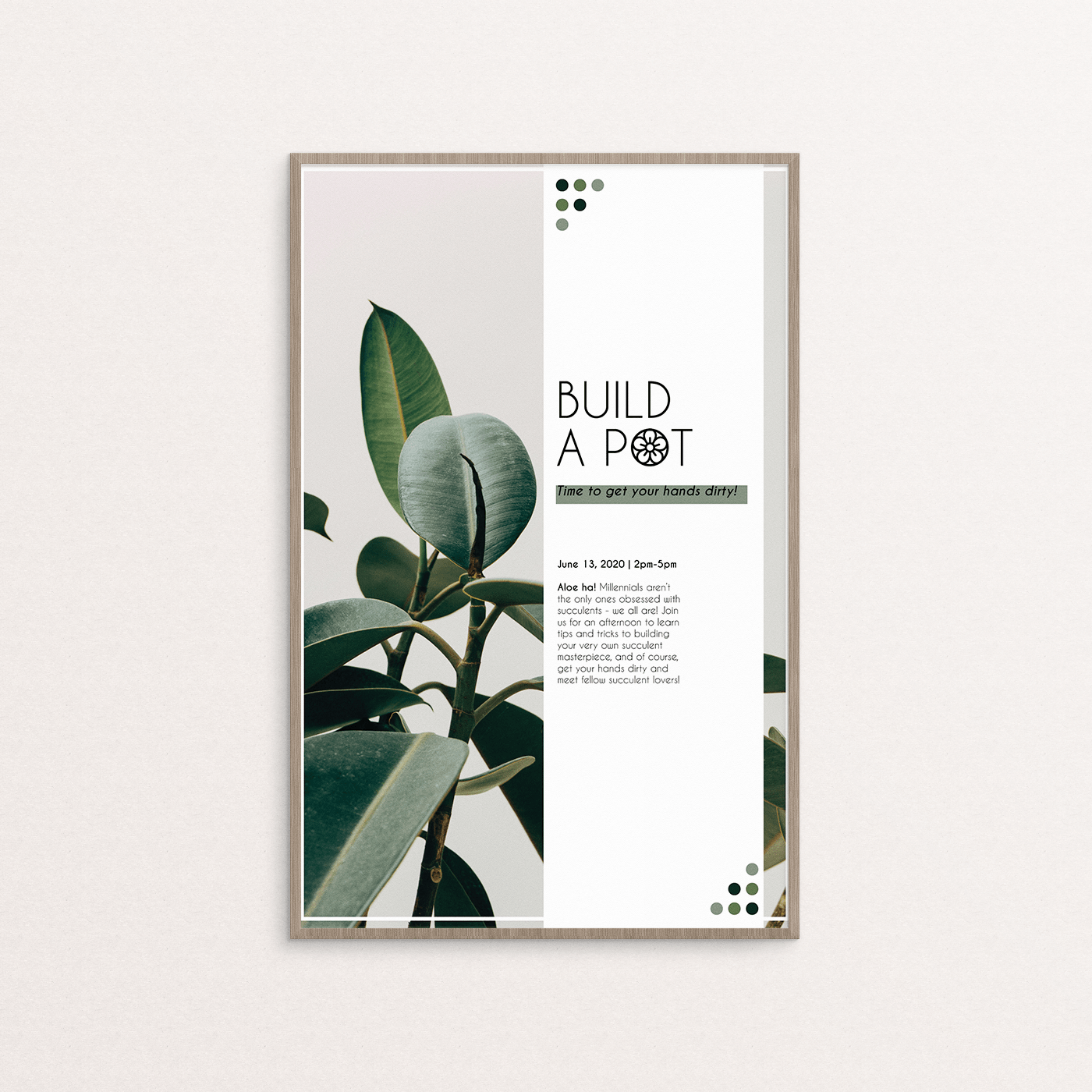
- poster for a made-up event, Build-A-Pot Workshop: Succulent Edition
- 11″x17″
- minimal, organic and rustic


• marketing, communications & design / yvr + hk •

Carefully stacked notebooks, raw wood furnishings and a clean palette of white, navy, and beige — MUJI is every minimalist’s dream. With the scent of yuzu, sage, and lavender wafting through the air, every inch of the store lives up to the minimalist aesthetics. In a culture that promotes hyper-consumerism, MUJI, a brand that promotes utility and plainness, feels oddly refreshing.
MUJI started with just 9 household items and 31 food products. Today, they are a global lifestyle brand with over 800 stores worldwide and 6,500 items ranging from garments to furniture. Their design, while understated, are instantly recognizable. How exactly did MUJI, a brand with no logo, advertising or spokesperson, grow into a retail giant with such a massive cult following? Let’s find out.
MUJI’s full name is Mujirushi Ryohin (無印良品), which translates to ‘no label, quality goods’. Built on a philosophy of anonymity and functionality, the brand was founded in 1980 when the Japanese market was being flooded with foreign luxury brands due to its rapidly growing economy. The founders identified a gap in the market for affordable and quality goods and carved out a niche for themselves as a “brandless” brand.
Representing a philosophy of minimalism that is becoming more recognized and appreciated globally, MUJI creates a seamless in-store shopping experience with a cozy ambiance that their consumers crave for and can resonate with on an emotional level. Since the minimalist lifestyle is so deeply embedded throughout MUJI’s identity, by associating themselves with the retail chain, consumers believe that they are one step closer to becoming more like the people they identify as, or aspire to be.
While staying true to their philosophy, MUJI continues to evolve as a business by expanding product lines and uncovering new opportunities including cafes, concept stores and even hotels. The company has managed to strike a sweet balance between growth and authenticity, and their success largely stems from their ability to consistently incorporate core values to not only their products but all aspects of their operation.
As a lifestyle brand, MUJI is not just selling products, it’s more about an experience and a way of life. What gives MUJI an edge is their ability to foster a sense of community built on shared values, and this is exactly what every brand should strive to deliver.

This summer, I have had the incredible opportunity to join the Japanese Casual Dining Sector of Maxim’s Group in Hong Kong as a Marketing Intern, and support the two ramen brands, IPPUDO HK and GOGYO HK with their marketing campaigns. As a lover of food, this was a dream-come-true to me – an opportunity to work at a large corporation in a city that I adore, in an industry that I’m interested in, and about one of the things that I love the most: ramen!
I decided to do my internship abroad because I wanted to dive into a completely different marketing landscape and, well, who doesn’t like traveling? As one of the marketing services capitals of Asia, the marketing industry in Hong Kong is dynamic, competitive and vibrant; and so was our office. Each day brought something different, whether it’s typing out a proposal for a prospective partner, researching menu designs on Pinterest, creating social media plans or preparing for an overnight shoot.
It’s true when they say the choice of your first boss sets your career goals. My boss and my team were extremely supportive, always ensuring that I had a well-rounded internship experience. I wasn’t asked to go on coffee runs or file paperwork, instead they showed me the many aspects of marketing, from developing content for online & printed communications to coordinating large-scale PR events; and more importantly, they made me feel like an important part of the team.


My internship truly opened my eyes to how fascinating branding, social media and digital marketing are and through it, I discovered my passion for marketing. Going into this internship, I was confused about the future and unsure of myself, and now I have left with more experience, knowledge and insight than I could have asked for. It has given me a better understanding of what I’m capable of and where my career may take me. While I don’t have a strong academic foundation in marketing, my knowledge in design, my tech savviness, and my ability to communicate across cultural boundaries set myself apart from others!
As cliché as it sounds, internship really is a great opportunity for people like us, who are still figuring life out, to connect with mentors in the line of business you’re interested in – someone who you look up to and can go to for advice. During these past few months, I have made connections with industry professionals and built strong, lasting relationships with colleagues who I am proud to call my friends. So from the bottom of my heart, thank you for making me the happiest intern in the world.
———
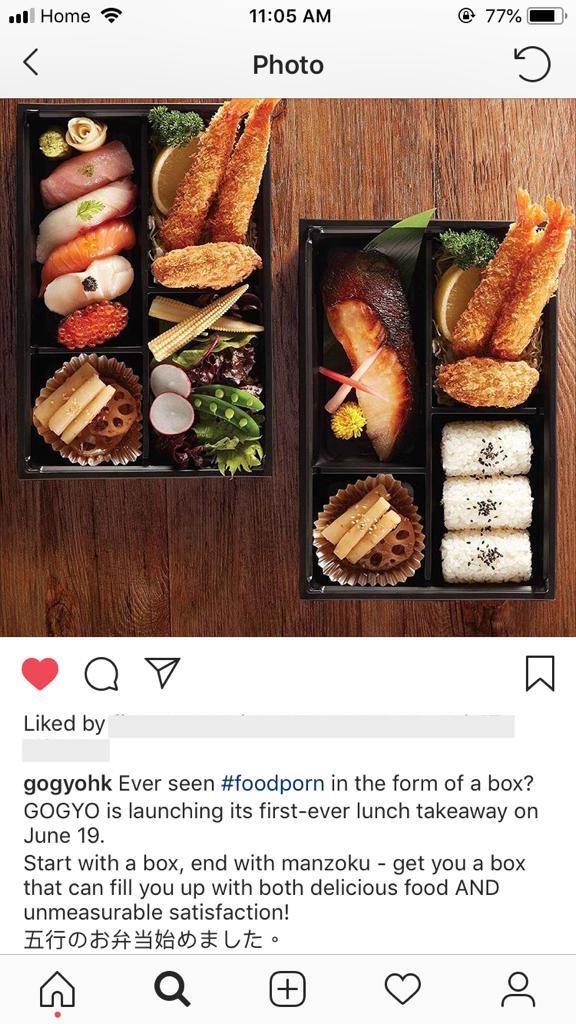
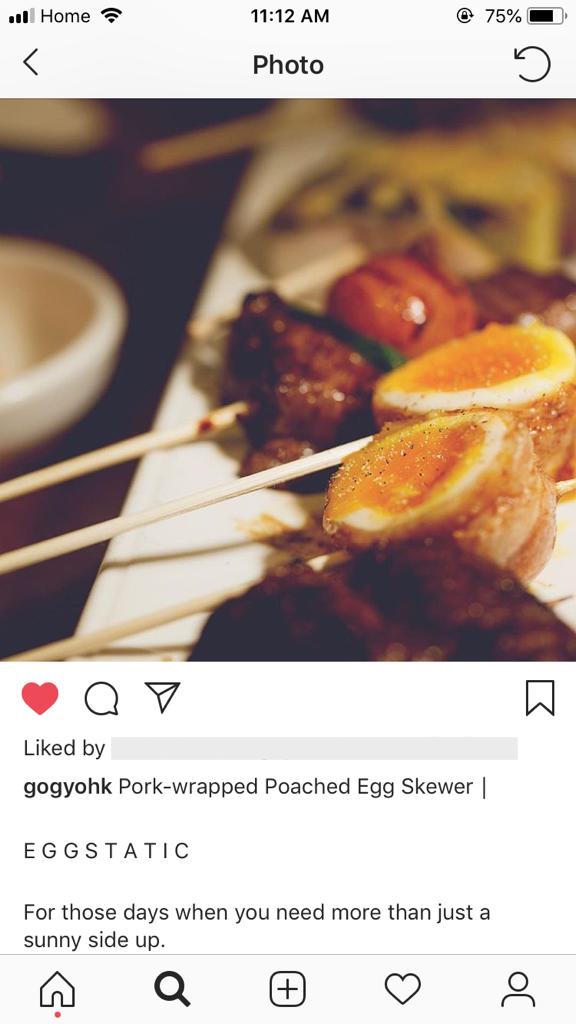
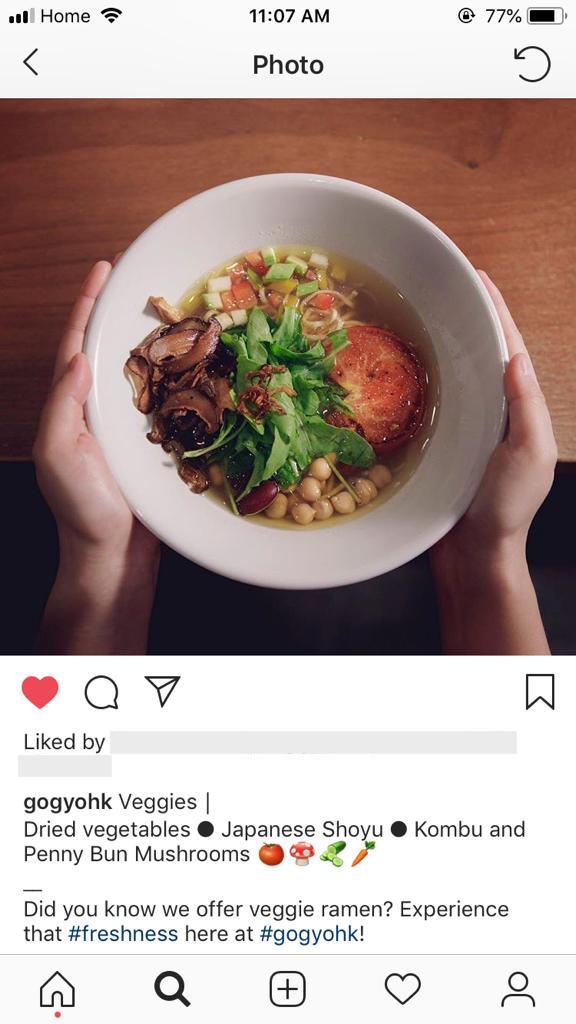
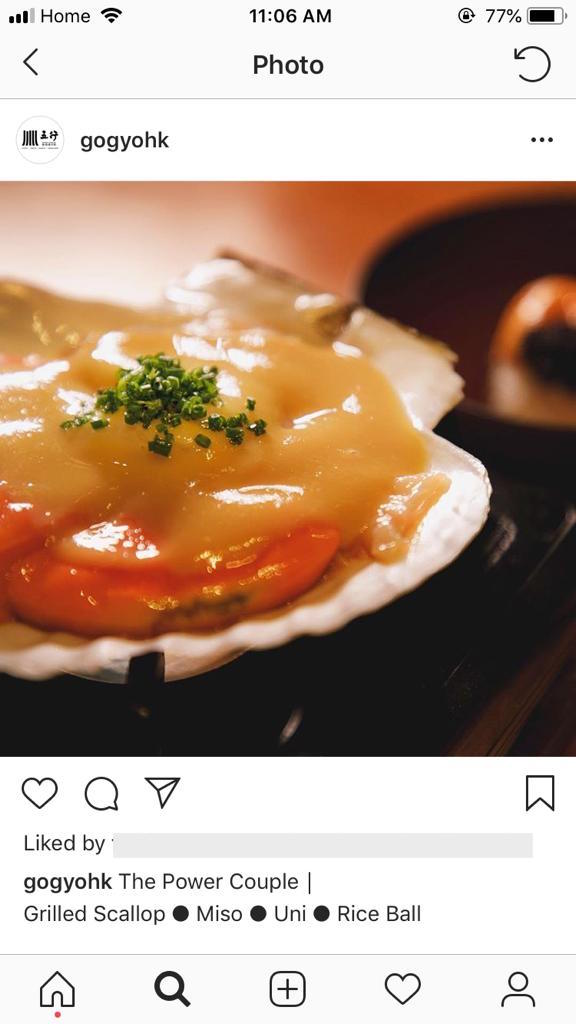
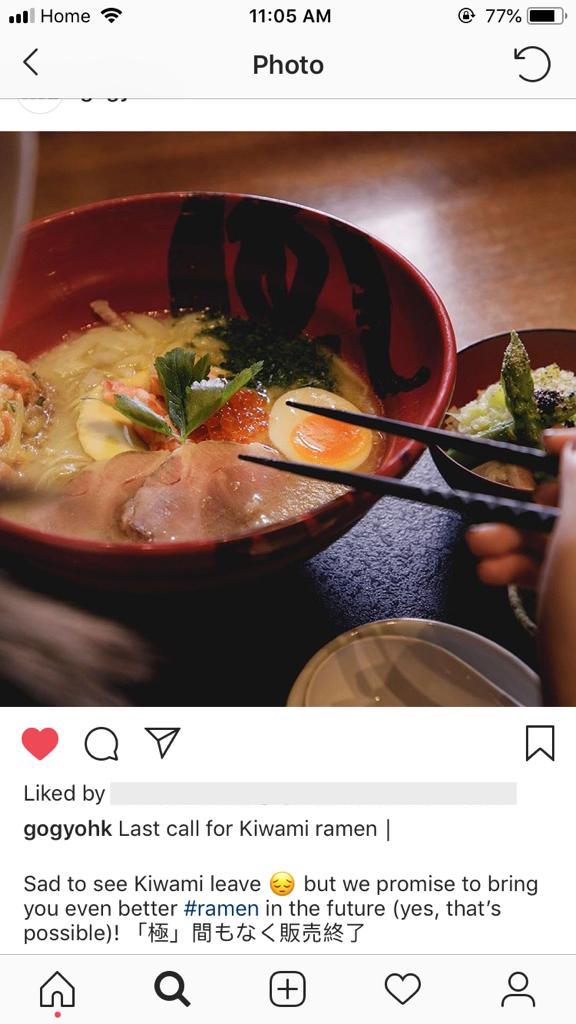
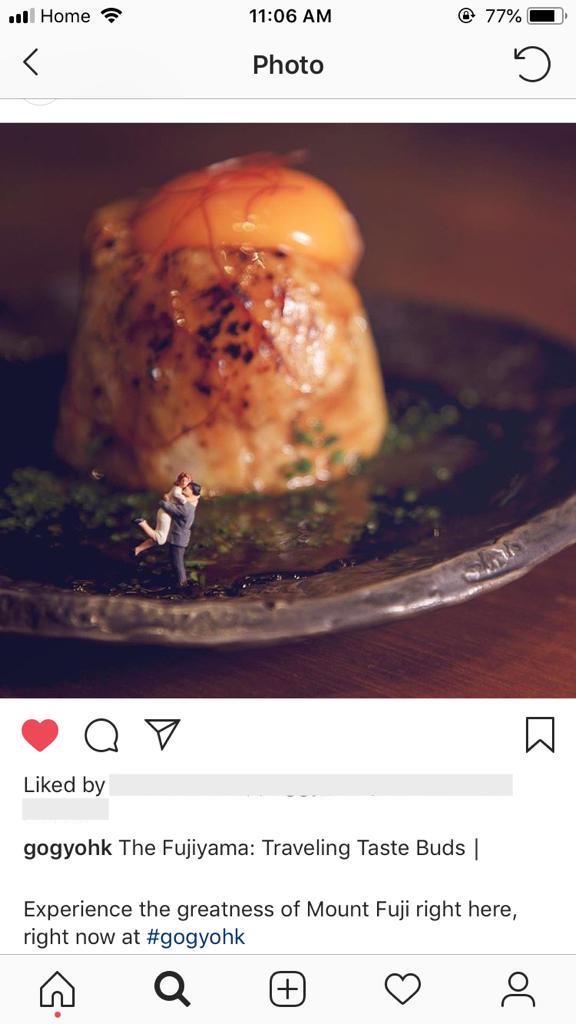
One of my favorite parts of the job was researching photo inspirations, organizing photoshoots and writing captions that align with our branding! Here are some examples of our work:

As a communications professional whose first language is not English, I think about language, accent, and culture a lot.
A little bit about myself — I grew up in Hong Kong but I studied in an international program. While I wouldn’t consider myself a native English speaker since my family and the majority of my friends speak Cantonese, I never had to worry about my English standing in the way of me communicating or landing an interview in my home country or overseas.
A few years ago, my family moved to Vancouver. As a newcomer to Canada, my brother was required to take an English level test to ensure he was placed in the appropriate curriculum and received the support he needs at school. While waiting for his assessment, I overheard a conversation between a desperate teenager and an impatient receptionist. The teen was trying to provide information about his recent move to Canada but the receptionist was having trouble understanding him. Distressed and embarrassed, the teen said, “Sorry for my bad English.”
I’m sure we have all heard this phrase before, whether in an online forum or in a real-life conversation, but what exactly is the mentality behind this whole sorry-about-my-bad-English attitude?
It is common for English speakers to naturally expect people to speak in their language as theirs is the global lingua franca and everyone else has gone to the effort of learning their language. No matter how many languages a person speaks — if they mispronounce words in English or speak with a non-native accent, they can easily be perceived as less intelligent and be subjected to ridicule due to their “lack of communication skills”. I know foreign students who drop their ethnic middle names and strive to lose their accent only so that they can prove that they are just as capable as native speakers of English. While English speakers have the privilege of learning for the sake of fun and improvement, speakers of other languages suffer from the pressure of knowing that their career prospects will be affected if they do not know the language well enough.
Accent is a funny thing. It gives variety and adds diversity to a language, a society and a culture, yet I have seen the most articulate people stutter and lose confidence in front of a crowd due to their accent. We often hear about the concept of privilege, relating to gender, race, and social status. What we don’t hear about as often in the media is linguistic privilege — an inherent advantage you get for growing up speaking a powerful language. As speakers of the global lingua franca, native English speakers are definitely the most linguistically privileged of all.
Native English speakers are privileged in a sense that they don’t have to deal with unreasonable expectations of being fluent and speaking without accents in a second language. They don’t have to deal with the fear of being judged unfairly based on their speech. Even in societies where English does not dominate, accommodations for English speakers are still rather prevalent.
In Hong Kong, people often joke that if you know Mandarin, Cantonese and English, you will get around; if you speak Cantonese and English, you will be pretty well paid; if you can only speak English, then you have absolutely nothing to worry about. This may sound absurd, but it’s the sad truth. Even in Hong Kong, where most people are Cantonese speakers, you are more likely to be excused for having poor Cantonese than for having bad English. I had numerous friends from international schools who couldn’t, or wouldn’t, speak Cantonese properly. In fact, some of them even pride themselves for having English, instead of Cantonese, as their first language. They are often deemed as being “more competent” or “better educated” because of their proficiency in English; whereas students with poor English often get ridiculed and do not have as much of an advantage in terms of job prospects and opportunities.
No one should ever feel the need to apologize for their bad “English”, or for their poor performance in any other languages. Not only does it create a power disequilibrium but it also reinforces unrealistic expectations.
To all the English learners out there: it is normal to have insecurities about how you sound in the ears of native speakers, but at the same time it is also absolutely normal to not be fluent in it. Lastly, to all the English native speakers: be considerate to other learners of English as privilege isn’t something you can choose, otherwise it would cease to exist.
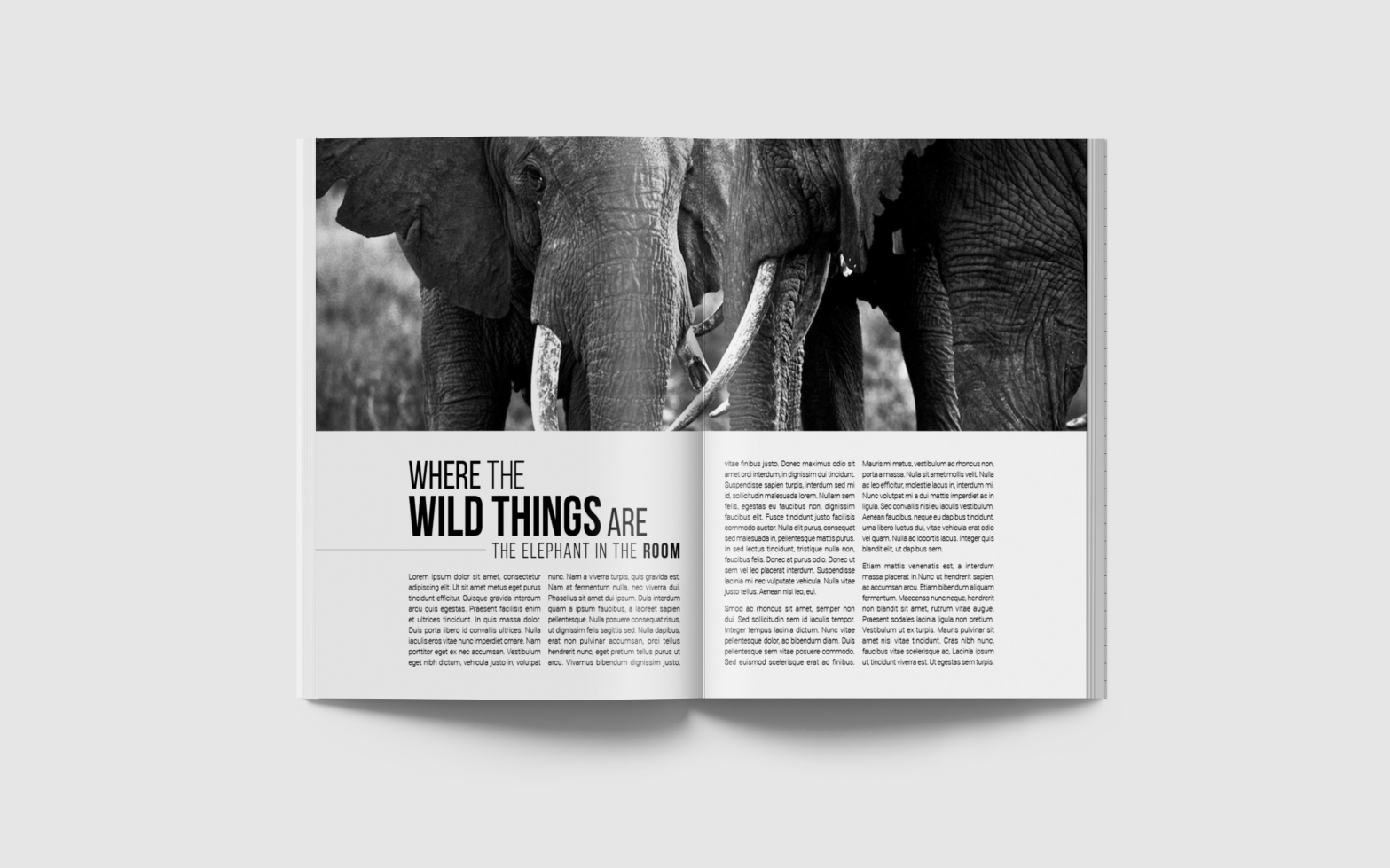


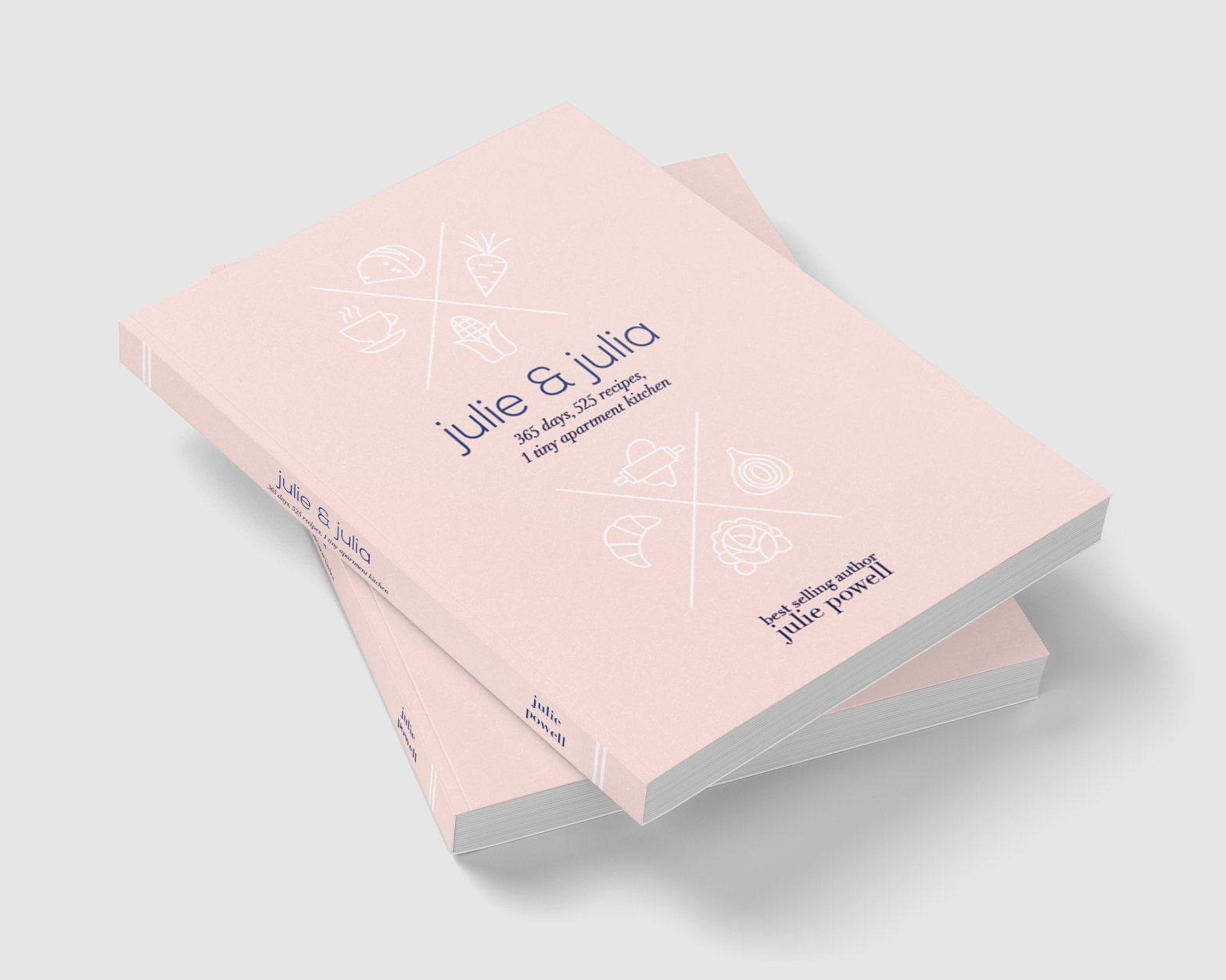


This is a reconceptualization of the novel Julie and Julia that I created for a publishing design course. The novel is about the embarkment of Julie, an aspiring writer, on a daring project to cook the 534 recipes written by renowned chef Julia Child in 365 days.
My goal was to design a book that is classy and elegant with a modern twist, which is completely different from the mass-market film adaptation paperback that we see in the bookstore. Since the readers of the book are mostly women with an interest in food and cooking, I decided to transform it into a fancy coffee table book in the size of 8 x10 inches, almost like a cookbook so readers will be able to lay it open on the counter.
To create a feeling of elegance and sophistication, I used a generous amount of white space, in combination with high-quality photographs. I also used light pastel colors throughout my design, as they complement each other and create a sense of softness, elegance and femininity, which align with my target audience. In terms of typography, I mixed serifs and sans serifs for a classic meets modern vibe. For display texts, I used Didot and Nexa, a geometric san serif.

 Samantha Tsui